What is Empathy?

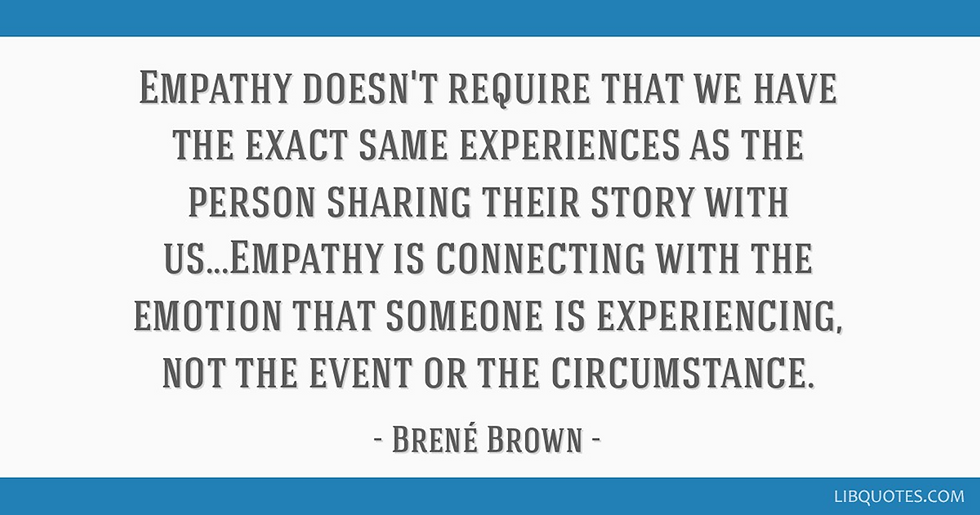
I practice as a humanistic therapist, meaning that my approach to therapy is rooted in the belief that empathy is a core condition for therapeutic change. That when a person feels deeply heard - without judgment, without interruption, without an agenda - they begin to reconnect with their own innate capacity for growth. I believe that empathy is not simply a skill to use in the therapy room, but that it is a way of being that allows for genuine human connection. Humanistic therapy rests on the belief that people are not problems to be solved but lives to be understood.
Empathy is not agreement with the other person or sympathy. Empathy is the practice of entering another person’s internal world while remaining grounded in our own. It is the art of saying, “I am here with you,” without trying to fix, correct, or control. Here's a quick video demonstrating empathy:
I have been lucky enough to witness the power of empathy in the counselling room. A client burdened by shame begins to soften when they realize I am not recoiling from their story. A grieving partner finds steadiness in knowing their pain does not overwhelm me. Empathy communicates a radical message: “You and your feelings make sense”. Even when behaviors are self-defeating or emotions feel chaotic, there is meaning beneath them. To approach others with curiosity instead of criticism, allows defensiveness to dissolve and the nervous system to settle.
Outside the therapy room, empathy is just as powerful. It can strengthen families, deepen friendships, and bridge social divides. The willingness to genuinely listen may be one of the most courageous acts available to us. Empathy does not mean absorbing another’s pain to the point of burnout. It requires boundaries and self-awareness. Empathy is an affirmation of shared humanity, it says: “Your inner world matters and you are not alone”.
How to Begin Building Your Empathy Muscle
The beautiful truth is this that empathy is not a fixed trait. It is a capacity you can strengthen with intention and practice. Here are some self-help practices you could try:
1. Practice Reflective Listening
In your next conversation, resist the urge to respond immediately. Instead, try reflecting back what you heard before sharing your own view. Try phrases like:
“It sounds like you felt…”
“What I’m hearing is…”
“That seems really important to you.”
This simple shift helps the other person feel understood, and trains you to truly listen to understand.
2. Get Curious, Not Certain
It can be easy for us to create stories or judgments in our heads about why people do the things they do. When you feel defensive or judgmental, pause and ask yourself:
What might be happening beneath the surface for them?
What fear, need, or hope could be driving this?
Curiosity softens rigid thinking and empathy grows when certainty loosens.
3. Expand Your Emotional Vocabulary
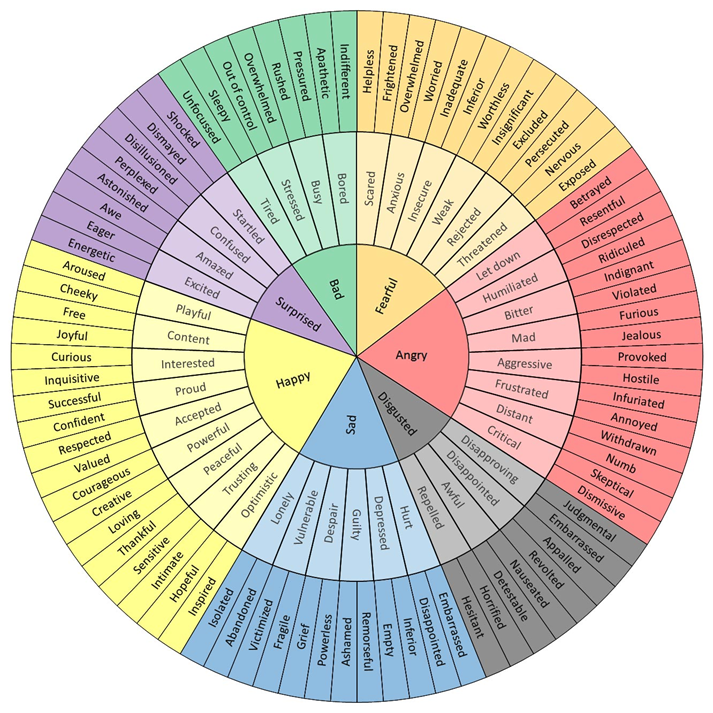
Many of us operate with just a few emotional labels: happy, sad, angry, stressed. The more precisely you can identify your own feelings, the more attuned you’ll be to others’. I really like this feelings wheel and often pull it out in sessions to share.
4. Regulate Before You Relate
Empathy is difficult when you’re emotionally flooded. If you feel triggered, take a breath. Slow your body. Ground yourself. Give yourself some space before responding. A regulated nervous system is far more capable of perspective-taking.
5. Read or Listen to Stories Outside Your Experience
Exposure to diverse lived experiences stretches your capacity to understand realities different from your own. Memoirs, podcasts, and conversations with people from different backgrounds and experiences can help expand your emotional understanding.
6. Practice Self-Empathy
This may be the most important step and is often the most challenging one for people to practice. Start by noticing your inner critic. Are you responding with harshness and judgement towards yourself? When you make a mistake, try responding inwardly the way you would to a dear friend. Self-compassion strengthens your ability to offer compassion outwardly.
Empathy is not about being perfect. You are human. You will misunderstand people and put yourself first at times. The practice lies in being curious and open to understanding.
Attending counselling, reflective journaling, and reading books about psychology/self-help can all be opportunities for growing your empathy muscle. As always, reach out if you’d like to connect,
Lisa xo


Comments